Friday, June 10, 2011

Grace and Works--An Excellent Article

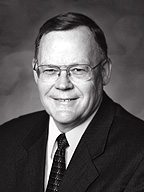
(image from lds.org)

As I've been preparing for a talk I've been asked to give this week in church on repentance (talk to come in a later post), I came across this excellent article. As it applies to the previous "Knowing by the Spirit" discussions, I thought my readers might find it interesting. I sure did. It is a 1981 article by Gerald N. Lund. I hope you enjoy it as much as I did!

Salvation: By Grace or by Works?
By Gerald N. Lund

When the Apostle Paul was imprisoned at Philippi, he was asked by a distressed jailer, “What must I do to be saved?”

Without reference to obedience or repentance or good works that he himself so often spoke of, Paul simply answered, “Believe on the Lord Jesus Christ, and thou shalt be saved.” (Acts 16:30–31.)

But in a church that also has many ancient and modern scriptural passages stressing works of righteousness and the importance of obedience to the laws and ordinances of the gospel, scriptural passages like Acts 16:31 often give rise to confusion.

“As far as I’m concerned,” one missionary said to his companion, “when somebody starts quoting Paul on salvation by grace, I just quote James on faith without works being dead (see James 2:17–26) and try to get off the subject as quickly as possible.”

“Before I joined the Church,” a Sunday School teacher confessed to his class of teenagers, “I quoted the words of Paul to everyone. Now I just kind of steer away from what he said. I know now how important good works are, so I put the emphasis there.”

It isn’t difficult to understand these reactions. Paul’s ringing defense of salvation by grace and his emphatic denunciation of justification through works of the law seem almost in direct contradiction to our third Article of Faith: “We believe that through the Atonement of Christ, all mankind may be saved, by obedience to the laws and ordinances of the Gospel.” [A of F 1:3]

The problem in understanding Acts 16:31 isn’t that Paul de-emphasizes the atoning sacrifice of the Savior, but rather that he seems to de-emphasize the need for works. What missionary hasn’t been confronted with Paul’s statement to the saints in Rome: “If thou shalt confess with thy mouth the Lord Jesus, and shalt believe in thine heart that God hath raised him from the dead, thou shalt be saved” (Rom. 10:9). Furthermore, in both Galatians and Romans, he pointedly rejects any idea that justification comes through works of the old law:

“Knowing that a man is not justified by the works of the law, but by the faith of Jesus Christ, even we have believed in Jesus Christ, that we might be justified by the faith of Christ, and not by the works of the law: for by the works of the law shall no flesh be justified” (Gal. 2:16; see also Rom. 3:20, 28).

Does Paul indeed reject the value of works for the disciple of Christ? Or was he simply reacting to the Jewish Christians who insisted that adherence to the law of Moses was necessary if one were to be saved? And, for us in the latter-days, does Paul’s theological position coincide with that revealed in latter-day scripture?

Inadequate Explanations

There are two different ways in which Church members typically seek to synthesize Paul’s teachings with Latter-day Saint theology. The first suggests that by “the law” Paul means only the law of Moses. Without a doubt, there is merit in this. There was a tendency among some Jewish Christians to insist that Christianity still required obedience to Mosaic principles such as circumcision, the dietary laws, and the observance of certain festivals. Paul combats that doctrine strongly, saying that no matter how strictly a person kept the law of Moses, it of itself would not bring salvation. The power of salvation comes only through Christ because of his atonement.

However, to limit Paul’s meaning to the law of Moses alone would not be quite accurate. Paul rejects the adequacy of the Mosaic code in and of itself for salvation, but he makes it broader than that too. For example, in warning the Ephesians about concluding that a man is saved by works, he makes no reference to the law: “For by grace are ye saved through faith; and that not of yourself: it is the gift of God: Not of works, lest any man should boast.” (Eph. 2:8–9.) So while this explanation is somewhat correct, it does not go far enough.

The second typical explanation goes something like this: The fall of Adam brought two kinds of death into the world—physical death, which is the separation of body and spirit, and spiritual death, which is separation of man from God. The atonement of Christ overcame physical death through the Resurrection. This is salvation by grace because it comes to all men automatically and does not depend on what kinds of lives they have lived. But, if we wish to overcome spiritual death and enter back into God’s presence, we must be obedient to laws and principles. This is exaltation by works. Thus, according to this explanation, we are saved by grace and exalted by works.

This is an appealing explanation because it seems to provide a logical argument that fits the statements of Paul neatly into it. However, there is a doctrinal error involved here. While the resurrection of the dead is certainly an integral part of the plan of salvation, and is unconditional and independent of men’s works, the term salvation as used in the scriptures does not mean physical resurrection alone. As Elder Bruce R. McConkie has pointed out, salvation is synonymous with exaltation:

“Salvation in its true and full meaning is synonymous with exaltation or eternal life and consists in gaining an inheritance in the highest of the three heavens within the celestial kingdom. With few exceptions this is the salvation of which the scriptures speak. It is the salvation which the saints seek.” (Mormon Doctrine, 2nd ed., Salt Lake City: Bookcraft, 1966, p. 670.)

Those who are uncomfortable with Paul’s statements about grace and salvation should bear in mind that the same teachings are found in other scripture as well. Nephi, for example, nearly echoes Paul’s words to the Ephesians when he says, “For we know that it is by grace that we are saved, after all we can do” (2 Ne. 25:23). And Lehi’s explanation of the Atonement to Jacob is remarkably similar to Paul’s explanation of justification by faith in Romans 3 [Rom. 3], even down to the phrase “by the law no flesh is justified” (see 2 Ne. 2:5). Likewise, the Doctrine and Covenants points out that both justification and sanctification come by grace (see D&C 20:30–31).

How, then, are the principles of grace and works to be understood in relationship to each other? To come to that understanding we must first look at some related concepts—the concepts of sin and transgression, of justice, and of the Fall.

Sin, Transgression, and the Law of Justice

The concept of sin rests upon the concept of law. If there were no law, there could be no sin (see 2 Ne. 2:13; Alma 42:17), because “sin is the transgression of the law” (1 Jn. 3:4). However, for purposes of understanding the Atonement better, it might be helpful to draw a distinction between two important variations in how the law may be violated. A person may violate the law in spite of his knowledge of it; that is, he breaks the law deliberately. But others may violate the law because they are unaware of its existence (ignorance) or because they do not have sufficient maturity to understand the implications of it (lack of accountability). For clarification, let us use two terms to delineate the important differences in these two concepts. Any violation of the law that is willful and knowing we shall call “sin.” But any violation that results either from ignorance or lack of accountability we shall call “transgression.” The scriptures do not distinguish between these two terms consistently, but such a distinction may help us understand some important points about the Atonement. For example, it helps us understand why children under the age of accountability cannot sin (see D&C 29:47). Any parent who has observed his children’s behavior knows that they often violate laws of the gospel. They hit brothers and sisters, demonstrate extreme selfishness at times, and can be unmercifully cruel to playmates. But while these are “transgressions” they are not “sins,” because as Mormon points out, children are “not capable of committing sin” (see Moro. 8:8). Much the same is true of those who have reached adulthood but have relatively little or no opportunity to learn the principles of righteousness. They also violate the laws of God, sometimes horribly so, as in the case of many primitive peoples, but they are of necessity judged differently because they do not “sin” in the sense of willing and deliberate rebellion against God. (See Rom. 2:12; D&C 82:3; also Teachings of the Prophet Joseph Smith, comp. Joseph Fielding Smith, Salt Lake City: Deseret Book, 1938, p. 218.)

Standing alongside the concepts of sin and transgression is the law of justice, which implies consistency in reward and punishment. In other words, there would be no justice if one person could violate the law and escape its punishment while another was punished for the same act. Elder McConkie points out that “justice demands that a penalty be paid for every violation of the Lord’s laws” (Mormon Doctrine, p. 406). The opposite, or positive side, of that idea is that for every keeping of the Lord’s law there is a reward (see D&C 130:20–21). If these punishments and rewards were not consistent throughout the universe and in all of eternity, justice would be violated. Briefly stated, then, the law of justice is that for every violation of law there is a punishment (ultimately suffering and misery), and for every obedience to the law there is a reward (ultimately joy and peace).

Also embodied in the concept of justice is the idea that men are punished only for those things of which they themselves are guilty. This would make it unjust to punish one man for another’s sin; likewise, if through ignorance or lack of accountability there is no guilt, it would be unjust to mete out punishment.

The Fall of Man

Just as the violation of the law has a dual nature (sin and transgression), and the law of justice has a dual nature (reward and punishment), so does the fall of man have a dual nature. The two falls are, as one person termed them, “the fall of Adam” and “the fall of me.”

When Adam transgressed the commandment given him by the Father in the Garden of Eden, he brought about the fall of man. Because of his transgression, death—both spiritual and temporal—entered the world; as a result, all men are born into a state of existence where they are separated from God and also must suffer physical death. Though these both end up working for our positive benefit, neither is the result of our own actions, but of Adam’s transgression and fall. They come upon us automatically and inescapably. However, “the fall of me” takes place for each of us as we individually sin. We’ll have more to say of this aspect of the Fall later.

Having discussed sin and transgression, justice, and the Fall, we have now laid enough groundwork to understand one of the important aspects of the atoning sacrifice of the Savior, that part that can be termed the “unconditional” atonement. The first application of the unconditional atonement is to the fall of Adam. We have pointed out that it would be unjust for a person to be punished for violations of the law that he did not commit. So regardless of the kind of life a person has led, the ultimate effects of the fall of Adam that we have been discussing are overcome for every soul that comes to earth. All persons will be resurrected and overcome physical death, and also, all will be brought back into the presence of God by the power of Christ for the period of judgment and the assignment of glory. (See 1 Cor. 15:22; 2 Ne. 9:38) Thus, both physical and spiritual deaths are removed through Christ. However, remaining in the presence of God is a matter relating to the “conditional atonement.”

Before analyzing that principle, however, there is a second application of the “unconditional” atonement. The “unconditional atonement” applies to those who are guilty of transgression but not sin in the sense we defined these terms. If there was no knowledge or accountability, it would be unjust to mete out punishment. Nevertheless, justice demands payment for every violation of the law, whether the violation be sin or transgression. So, as one example, the atonement of Christ automatically redeems children who die before they reach the age of accountability, and they are brought back into the presence of God. (See D&C 137:10.)

The Fall of Me

Now let us turn to the second aspect of Christ’s atonement, the “conditional” atonement.

While all of us were born into a situation where we are separated from God because of Adam (this we shall recognize as a form of spiritual death), we (only those who are accountable, of course) remain in that state because of our own personal fall which results from our own sins. The Doctrine and Covenants clearly points out, however, that we could enter back into God’s presence in this life if we would but purify ourselves from sin—or, in the terms we are using, overcome the effects of our own personal fall. (See D&C 67:10, D&C 88:68; D&C 93:1; see also Ether 3:13.) This purification from sin strongly involves the role of works—works of repentance and obedience are indispensable to the achievement of such a high and holy privilege. Even so, is it really by our works that we are saved from spiritual death? Again Paul and the other prophets indicate no. And to understand this, we must once again look at the law of justice.

Remembering that every violation of the law demands punishment of suffering, there are only two ways possible to meet the demands of the law of justice. Either one keeps the law perfectly and never gets in debt to the law, or else one must pay the debt of suffering. The law is very exact. Even if it is violated only once, the violator is in its debt and must suffer the consequences. Perhaps this is why James warns, “For whosoever shall keep the whole law, and yet offend in one point, he is guilty of all” (James 2:10).

Now we can see why both Paul and Lehi warn us that no one can be justified by the law: no one (with one exception) has ever kept the law perfectly. Every soul is in debt to the law. “For all have sinned, and come short of the glory of God” (Rom. 3:23).

The Need for Grace

In Greek, the word which is translated as grace means “good-will, loving kindness, favor.” In the New Testament usage, the word implies “the idea of kindness which bestows upon one what he has not deserved.” (Greek-English Lexicon of the New Testament, trans. Joseph Henry Thayer, Grand Rapids: Zonderron Publishing House, 1962.)

In the scriptural sense of the term, it is impossible for a man to be justified (brought back into a proper relationship with God) by his own works, because no one can keep the law perfectly. This was the very mistake that the Pharisees fell into with regard to the Mosaic law. We sometimes smile at their tremendously careful attempts to define the law and what was acceptable to it; but if you hold that a man is brought into the proper relationship with God by his own works alone, then theirs was a logical position to take. If the tiniest infraction of the law puts one’s relationship to God in jeopardy, then one must be extremely careful about any violation. The early rabbis simply carried that idea to its extreme. For example, in the law it said, “Keep the Sabbath day holy.” Very well then, what does that mean in terms of my behavior? Well, for one thing, I mustn’t do any work. All right, but what happens if my house should catch fire on the Sabbath? Is it “work” to take things out and save them from destruction? A ridiculous question?—not if you are seeking justification by the law. And so, with great precision the rabbis enumerated what could and could not be saved. They even defined how much food could be saved, depending on what time of day the fire occurred. If it broke out on Friday evening (the Jewish Sabbath went from sundown Friday to sundown Saturday), one could save enough for three meals; if Saturday morning, two meals; and if Saturday afternoon, only one. (See Mishnayoth [The Oral Law], “Tractate Sabbath,” 16:2.)

These are the kinds of logical conclusions one is forced to if one seeks justification by the works of the law alone.

To better see why such attempts are ineffective, let us analyze a parable given by Elder Boyd K. Packer in an April 1977 general conference address (“The Mediator,” Ensign, May 1977, pp. 54–56), in which he refers to the spiritual jeopardy of all those who are born on this earth:

“There once was a man who wanted something very much. It seemed more important than anything else in his life. In order for him to have his desire, he incurred a great debt.

“He had been warned about going into that much debt, and particularly about his creditor. But it seemed so important for him to do what he wanted to do and to have what he wanted right now. He was sure he could pay for it later.

“So he signed a contract. He would pay it off some time along the way. He didn’t worry too much about it, for the due date seemed such a long time away.” (p. 54.)

Thus, having entered mortality in a state of innocence, man begins to sin and loses his perfect worthiness. He incurs a debt (a burden of sin) which, unless paid in full, will extend into the eternities “the spiritual death, which is separation from the presence of our Heavenly Father” (p. 56).

Under these circumstances (disregarding the Atonement for the moment), even if he suddenly realized that he had cheated himself of the opportunity to go back to the presence of God and stopped increasing his debt (that is, he stopped committing sin and became obedient), there is still no way that he could ever qualify to return to the Father. Even if he only committed one sin (which is unrealistic, of course, for most of us sin not once but many times), he still could not get back; full payment is the condition for admittance, and there can be no exceptions—justice is perfectly exact. Ceasing to sin merely stops the increase in the burden of debt—it does not generate the means to repay.

There is, of course, an advantage in keeping the burden of sin (the debt to the law) as small as possible; nevertheless, at the commission of the first sin a person loses his ability to return to God.

Elder Packer continues:

“As it always does, the day came, and the contract fell due. The debt had not been fully paid. His creditor appeared and demanded payment in full.”

The debtor’s dilemma is acute: “‘I cannot pay you, for I have not the power to do so,’ he confessed.

“‘Then,’ said the creditor, ‘we will exercise the contract, take your possessions, and you shall go to prison.’”

But the debtor begged, “‘Will you not show mercy?’”

The creditor replied, “‘Mercy cannot rob justice.’”

“There they were: One meting out justice, the other pleading for mercy. Neither could prevail except at the expense of the other. …

“Both laws, it seemed, could not be served. They are two eternal ideals that appear to contradict one another. Is there no way for justice to be fully served, and mercy also?

“There is a way! … but it takes someone else. And so it happened this time.

“The debtor had a friend. He came to help. He knew the debtor well. … He wanted to help because he loved him. He stepped between them, faced the creditor, and made his offer: …

“‘You demand justice. Though he cannot pay you, I will do so. You will have been justly dealt with and can ask no more. …’

“And so it was that the creditor was paid in full. … The debtor, in turn, had been extended mercy. Both laws stood fulfilled. Because there was a mediator, justice had claimed its full share, and mercy was fully satisfied.” (pp. 54–55.)

Once the debt was established, then, outside payment had to be introduced from somewhere or the debt would have stood forever. And thus it is that only in the sacrifice of the Only Begotten Son, who had no sin, could man be delivered from this sad state.

Christ—The Source of Unlimited Reserves

The Savior could effect the deliverance for two important reasons. First, he met the demands of the law of justice for himself because he kept the laws of God perfectly. In other words, Christ was justified by his works. He avoided the debt altogether and qualified himself to return to the Father—the only one of all mankind to do so. Secondly, he met the demands of the law for all of the rest of mankind. He himself owed no debt to the law, but he went before it and in essence said: “I am perfect and therefore owe you no suffering. However, I will pay the debt for all mankind. I will undergo suffering that I might pay the price for every transgression and sin ever committed by any man.”

And so, in the Garden of Gethsemane, Christ stood before the law and paid the price in suffering for every sin as though he himself had committed them. Such suffering was beyond the power of any mortal man to endure. We can’t understand how he did it, only that he did, and that “through Him mercy can be fully extended to each of us without offending the eternal law of justice” (Packer, p. 56). In terms of our parable, he generated sufficient payment to satisfy the debt of every other man. He met the demands of the law for himself through obedience, and for all others through suffering.

Alma told his son Corianton that mercy could not rob justice, or else “God would cease to be God” (Alma 42:25). And the merciful love of the Father and the Son did not rob justice of its rightful demands. Rather, it paid justice! Their Love said to Justice, by virtue of the price paid in the Garden, “Here is payment for the wrongs committed. You are paid in full. Now let the captives go free.”

In one of the most beautiful images in all of scripture, we find the solution to that awful dilemma we all face as sinners. We are standing before the bar as defendants, facing the great judge, God the Father. Our defense attorney—our “Advocate with the Father”—steps forward, not to refute the charges or to hold up a record of good works on our part to counterbalance our guilt, but to plead our case in a different manner:

“Listen to him who is the advocate with the Father, who is pleading your cause before him—

“Saying: Father, behold the sufferings and death of him who did no sin, in whom thou wast well pleased; behold the blood of thy Son which was shed, the blood of him whom thou gavest that thyself might be glorified;

“Wherefore, Father, spare these my brethren that believe on my name, that they may come unto me and have everlasting life.” (D&C 45:3–5.)

Nothing man could do for himself could bring him past that judgment bar successfully without such an Advocate. That is why eternal life is always a gift, and those who receive it do so by “inheritance.” It is interesting to note that the word inherit and its cognate words are used seventy-eight times in the Doctrine and Covenants, while the word earned and its related words are not used once.

The Conditional Atonement

But the sacrifice which pays the debt and frees us from the results of our own spiritual death, though it comes to us through the grace and goodness of God, is not unconditional. What, then, are the conditions? Very simply stated they are: first, faith in the Lord Jesus Christ, then repentance, followed by baptism. If one truly moves through those steps—mentally, spiritually, and physically—then he is prepared for the reception of the Holy Ghost. When one is given the gift (there’s that word again) of the Holy Ghost, he has overcome spiritual death to a degree, for he has come into the presence of one member of the Godhead. The Holy Ghost’s role, of course, is to help us continue in the pre-conditions of this part of the Atonement and fully overcome spiritual death by coming back into the presence of the Father and the Son.

Now with all this in mind, remember that Paul said we are justified through and by faith (see Gal. 2:16; Rom. 3:28), which is the first principle of the gospel. In other words, faith is the principle that activates the power of the Atonement in our lives, and we are put back into a proper relationship with God (justification) as faith activates that power. There are marvelous implications in this concept, and perhaps another analogy can help us see more clearly the role faith and works play in achieving salvation:

We are like a powerhouse on a mighty river. The powerhouse has no power residing in itself; the potential power rests in the energy of the river. When that source of power flows through the generators of the power plant, power is transferred from the river to the power plant and sent out into the homes (lives) of others. So it is with faith. The power to achieve justification does not reside in man. Man requires the power of the atonement of Christ flowing into him. If no power is being generated, one does not—indeed, cannot—turn the generators by hand (justification by works); but rather, an effort is made to remove those things which have blocked the power from flowing into the generators (working righteousness as a result of faith). With this background then, one can understand why the scriptures clearly stress that faith includes works (see James 2:17–26); that is, obedience, commitment, and repentance—these are the works of faith that open up the channels so that the power of the atoning sacrifice of Christ can flow into us, redeem us from sin, and bring us back into the presence of God. Disobedience and wickedness dam those channels. (How literal is the word damnation!) The righteous works in themselves do not save us. The atoning power of God saves us. But our righteous works, activated by our faith in the Savior, are the condition for the operation of that power. Thus, each of us has something to say about whether he will be able to seek the gift and power of the Atonement in his behalf.

We Are Saved by Grace

In summary then, there is no need to go to extraordinary lengths to apologize for Paul, or try to explain away his statements on salvation by grace. We are saved by grace—saved by Christ’s love from physical and spiritual death; saved by Christ’s love from Adam’s fall and our own; saved from sin and transgression by the grace or gifts of God. The atoning power of God unto salvation is a freely available gift from him—but our works of righteousness are essential to bring the gift into power in our lives. Sin brings alienation from God. The more we sin, the greater the alienation and the more difficult it becomes to effectively tap the power of God, which alone is sufficient to save us from our sins.

President Joseph Fielding Smith has summarized the relationship between grace and works as follows:

“So Paul taught these people—who thought that they could be saved by some power that was within them, or by observing the law of Moses—he pointed out to them the fact that if it were not for the mission of Jesus Christ, if it were not for this great atoning sacrifice, they could not be redeemed. And therefore it was by the grace of God that they are saved, not by any work on their part, for they were absolutely helpless. Paul was absolutely right.

“And on the other hand, James taught just as the Lord taught, just as Paul had taught in other scripture, that it is our duty, of necessity, to labor, to strive in diligence, and faith, keeping the commandments of the Lord, if we would obtain that inheritance which is promised to the faithful. …

“So it is easy to understand that we must accept the mission of Jesus Christ. We must believe that it is through his grace that we are saved, that he performed for us that labor which we were unable to perform for ourselves, and did for us those things which were essential to our salvation, which were beyond our power; and also that we are under the commandment and the necessity of performing the labors that are required of us as set forth in the commandments known as the gospel of Jesus Christ.” (Doctrines of Salvation, comp. Bruce R. McConkie, 3 vols., Salt Lake City: Bookcraft, 1954–56, 2:310–11.)

Thus, we can with Paul fervently exclaim that “the wages of sin is death; but the gift of God is eternal life through Jesus Christ our Lord” (Rom. 6:23). We should continue to stress the importance of obedience, of repentance, of faith, and strive with all our hearts to demonstrate good works in our lives. But we should never lose sight of the great overriding fact of the grace of God and the wholly central part it plays in our atonement and salvation.

Moroni, in the closing words of the Book of Mormon, teaches the relationship between the grace of Christ and the need for our righteous efforts. Note how he keeps distinctly clear what it is that perfects us, and yet what must happen in our lives to bring that about.

“Yea, come unto Christ, and be perfected in him, and deny yourselves of all ungodliness; and if ye shall deny yourselves of all ungodliness and love God with all your might, mind and strength, then is his grace sufficient for you, that by his grace ye may be perfect in Christ; and if by the grace of God ye are perfect in Christ, ye can in nowise deny the power of God.

“And again, if ye by the grace of God are perfect in Christ, and deny not his power, then are ye sanctified in Christ by the grace of God, through the shedding of the blood of Christ, which is in the covenant of the Father unto the remission of your sins, that ye become holy, without spot.” (Moro. 10:32–33.)

Tuesday, July 20, 2010

Knowing By the Spirit, Part II—Dear Debbie


In response to my post entitled Knowing By the Spirit (which can be viewed here), my friend, Debbie, said:
Jen - you said in this post: "Without an atonement, there could be no mercy to satisfy justice, and we would need to pay for our own sins. But, without repentance, the atonement cannot take effect on our salvation. So, although Christ has suffered for our sins, we are still held accountable for our own actions—for our “works” in this life."

So (correct me if I've interpreted you wrong :) ),
We sin - we create a debt that needs to be paid.
Christ suffers for our sins - He pays our debt.
We repent - we accept Christ's payment of our debt - the atonement takes effect in our salvation.

So at this point our 'account' is zero - since Christ paid our debts. But you still say that we have to account for our sins? How so, if our account balance is zero because of the Saviors' atonement?

Another point you made earlier in this post was in reference to the scientific method. In this method, as you stated, we start with a truth. And in science a truth is an indisputable, solid, unchanging factor. It is unsettling to me that the 'truth' you are basing everything else off of is a 'warm feeling' or 'burning of the bosom', etc. This is definitely something that is disputable. For example, many people feel good ('warm') about a lot of things that aren't true. In fact, people have died for things they felt good about, but weren't absolute truth.
And I most definitely love your point about absolute truth. Truth is truth, it doesn't change in regards to what we believe, or what we think.

The Atonement and Accountability
Thank you, Debbie, for continuing this discussion.  Let me first address the atonement and our accountability as I understand it.  But, before I do so, I would like to point out that there is so much depth to the atonement and how it applies to our lives that I couldn’t possibly do it justice in a single post.  It is so much more than simply paying a debt for our sins (for example, it brings us resurrection, regardless of sin).  So, I will try not to stray too much from the question at hand, though some additional insight on the atonement may be necessary to answer your question satisfactorily. 

I believe that I am understanding your question, and I think it stems in large part from a matter of semantics.  I would not say that you have “interpreted [me] wrong” per se, but more accurately “interpreted my explanation incompletely.”  I think the breakdown has oversimplified the atonement and how it works.  While simple explanation can be a good building block in coming to understand a concept, there is always more depth to clarify any understanding. 

While Christ’s atonement does pay the debt created by our sins, it also allows Him the ability to judge us righteously and apply mercy appropriately.  (For that matter, it also takes effect in our lives not only as a saving grace, but also as a comforting grace—bringing us comfort amidst our trials.)  Furthermore, while repentance does, indeed, include “[accepting] Christ’s payment of our debt,” it is also so much more than that.  Repentance also involves a change in one’s self.  It is not simply stating that we have sinned and that we would like Christ’s atonement to make up for it.  If we do not change, we continue to sin.  And, if we continue to sin, we will not be able to live in the presence of the Lord.  (For that matter, if we continue to sin, we would not want to live in the presence of the Lord.  We would be more comfortable living with those like ourselves, which in itself I see as merciful.  But that’s a discussion for another time.) 

So, if we have not “changed”, our account is not “zero”, even though the Savior has performed the atonement.  We are accountable for our sins, meaning that justice will have its demands on us if “we” do not make that change.  It is not Christ’s atonement alone that accounts for our sins, but also our own change within (of course, the atonement can also assist us in that change).  Similarly, even if we do change, it does not take away the fact that we sinned in the first place.  So, without Christ’s atonement, our own personal change, alone, cannot allow mercy to satisfy those demands of justice either.  So, in this sense, both we and He account for our sins.  I hope that answers your question.  Please let me know if you need any more clarification.


The Scientific Method and the Confirming Spirit
Now, I would like to address your questions regarding the scientific method.  As you described it, “in science a truth is an indisputable, solid, unchanging factor.”  Yes, that is true in respect to the ultimate knowledge we are trying to obtain.  Like I said, truth is truth.  But in science, and in faith, we are always approaching that whole truth.  We are applying bits of truth that we have acquired to discover more truth.  However, the reason “it is unsettling to [you] that the 'truth' [you believe I am] basing everything else off of is a 'warm feeling' or 'burning of the bosom', etc” is simply because you have misunderstood my explanation of where spiritual confirmation comes into play. 

Truth is acquired by applying those truths we have already come to know.  We use a bit of truth to develop a hypothesis upon which to perform a study.  Whether the study refutes or supports that hypothesis determines what additional bit of truth we acquire.  It is at that point, that one can turn to the Spirit to confirm that new understanding (of course, the spirit can also guide us in the formation of hypotheses that will help lead to greater amounts of knowledge, if we so desire).  The confirming spirit of the Holy Ghost is simply additional evidence—added to that which we have already acquired through the scientific process.  Like I said in the last post on Knowing by the Spirit, it is like a teacher confirming that your work is correct.  Your work may be correct, whether or not a teacher confirms it, but that confirmation gives you that additional evidence, and brings efficiency to the learning process.  And, likewise, the direction of the teacher throughout the process can also improve learning efficiency.

Additionally, our recognition of that Spiritual confirmation is dependent not only on whether or not it is present, but also on whether or not we have developed the skills to recognize it accurately and differentiate it from the desires of our own heart.  As you say, “many people feel good ('warm') about a lot of things that aren't true.”  I would point out that the “warm feeling,” or “burning bosom,” or however one describes a confirming spirit or spiritual prompting, is not simply feeling good (or even “warm”) about something—it is so much more than that.  A person can feel “good” about a thing, simply because they desire it.  But, as we come to recognize how the spirit speaks to us individually (as it is unique for each individual—some even physically hear a voice), then we gain a greater ability to accurately recognize it for what it is. 

The way I explained it in the footnotes of the last “Knowing by the Spirit” post was that “as we receive and heed promptings, we become better able to recognize them, more attune to them, just as a musician becomes more attune to his instrument the more he plays it.”  A musician may recognize what instrument they are hearing/playing, but not yet be able to distinguish the note or appreciate the tone that is being played on that instrument.  That ability comes through experience for many (and is a God-given gift for others—just as is recognition of the Spirit and its promptings and confirmations).  Even the great prophet, Samuel, did not recognize the voice of the Lord when he first heard it.  He supposed it to be the voice of his master, Eli, as he had never before heard the voice of the Lord.  But, with the initial direction of Eli, and through personal experience, he learned to distinguish and identify that voice, later becoming that great prophet.  Interestingly enough, your unsettled feeling with regard to truth and a “warm feeling” could be, in itself, another example of knowing by the spirit.  You did not understand how “everything” could be based off a warm feeling and the spirit gave you an “unsettling” feeling to confirm to your mind that the way you had understood the concept was not correct.

I hope this helps, Debbie.  This day has been crazy and I didn’t have a lot of time to write.  But, I hope I was able to communicate clearly, nonetheless.  Please let me know if you have anything else to add to the discussion or any more questions.  Hope things are going well for you.  We miss you guys!

Sunday, July 18, 2010

Seven Years of Famine--Applying the scriptures to our lives Part II

I was reading in Genesis today about Joseph.  I read about his brothers selling him into Egypt, and about Potipher's wife falsely accusing him of forcing himself on her, and about his time in prison.  I continued to read about how he interpreted dreams for his fellow prisoners and how, when the Pharaoh had dreams that no one could interpret for him, he called upon Joseph to interpret his dreams.  Pharaoh describes his two dreams, in the one the seven fatfleshed kine are devoured by the seven thinfleshed kine, and in the other, the seven withered ears of corn devour the seven full and good ears.  Joseph interprets the dreams, explaining that the land will see seven years of plenty followed by seven years of famine.  He instructs the Pharaoh to spend the seven years of plenty preparing a storehouse to allow for provisions during the seven years of famine.  After which, Pharaoh makes him ruler over all of Egypt.  Of course, during the famine, Joseph's brothers come to buy grain from the Pharaoh's storehouse.  At which point, Joseph provides for them, even returning them their own money and giving them even more.  Finally, he reveals to them his identity and they rejoice in their reunion.

Oh, the many marvelous lessons there are in these few chapters.  As I read this account, my first thought was about how we pass through times in life of spiritual plenty and famine.  And how we need to spend our times of spiritual plenty, filling our souls with spiritual food so that we might withstand the times of spiritual famine, when they come.

I thought also about the character and trials of Joseph.  Here is a man, whose own brothers plotted his murder and then sold him into slavery.  Does he live in bitterness?  Does he curse God for not stopping this from happening?  No!  He lives the law of the Lord in such grandeur that he gains favor in the sight of his master, Potipher, and is given dominion over all that Potipher has.  Then, again, Joseph is betrayed.  This time by Potipher's wife and consequently thrown into prison.  Again, does he live in bitterness?  No!  He serves his fellow prisoners and even gains favor of the prison guard and is given reign over the prison.  By serving his fellow prisoners as an interpreter of dreams, he is made known unto the Pharaoh.  And, then, again gains favor and is given dominion over the entire kingdom.  Then, does he seek revenge, in his powerful position, against Potipher's wife or against his brothers?  Does he even withhold anything from them?  No!  He gives his brothers all they ask for and even returns their money unto them and goes on to give them a place to live in Egypt where they will be better provided for!  And, after revieling to his brethren his identity, when his brothers cry at his feet begging forgiveness for what they did to him, he not only shows forgiveness, but tells them that it was the Lord's plan:

"Now therefore be not grieved, nor angry with yourselves, that ye sold me hither: for God did send me before you to preserve life". 

As I reflected on Joseph's character, it occurred to me that any circumstances of life can be made a blessing by the Lord, if we but choose to live as He has taught us.  We can choose to face our trials and think "woe is me" for having to endure them.  Or, we can choose to really "endure" them well--to serve those around us, no matter whom they may be.  And, if we do so, we will be blessed.  Perhaps not in the way we might want (Joseph's trials were not taken from him), but in ways far greater (Joseph was able to use his trials to save the lives of likely thousands of people as well as gain dominion over the kingdom).  Joseph truly was a wise steward--a wise steward of the land, a wise steward of his family, a wise steward of his time, a wise steward of his agency, a wise steward of his circumstances, a wise steward of his knowledge . . . .  I hope that I can become a wise steward like unto Joseph, so that I might endure and provide during the seven years of famine I face in my life.

Saturday, June 26, 2010

Ever a Student--Applying the Scriptures to our Lives

Long after we graduate from college, we remain students. We spend our whole lives learning.  And, we can participate in one of the greatest courses, if we but allow the lord to be our teacher and the scriptures to be our textbooks. One of the most wonderful and marvelous things about scripture is its applicability to our lives. As we read about those who have gone before, we can learn from their experiences. It is a gift for which I am most grateful. I would like to share an experience I had this morning.

We are still struggling to make ends meet while trying to sell our home. It has been one of the more difficult trials of our life at this point. Well, this morning, I was reading about the Brother of Jared and his friends and family as they crossed the great sea. I was struck with the passage that explained how the Brother of Jared praised the Lord throughout the entire journey. I found this to be really remarkable and a great lesson for me right now in my life.

The scriptures talk about the Brother of Jared praising the Lord after they first explain the mountainous waves that continually buried them deep in the sea. Here he is, going through a significantly difficult trial--perhaps one of the most difficult in his life. They are being tossed about by the sea; they are being buried completely down in the waters of the ocean. They are bearing children whilst at sea. This is no easy voyage. Yet, the Brother of Jared spends it praising the Lord. He does not spend it complaining to the Lord. He does not spend it pleading with the Lord to take it away or make it stop. In fact, before the voyage even began, the Brother of Jared did not even ask the Lord to prevent it; but rather, he asked the Lord forr help so that he might better endure it.

How many times have I cried and complained to the Lord before and during this trial in my life, asking Him first to prevent it, and then to take it away or end it?  Yet, despite my spiritual immaturity, the Lord in His mercy has given me the blessings and tools to better endure it. Just as he taught the Brother of Jared how to build those unusual vessels that would be water tight and withstand the violence of the sea, so has He given me the gospel and taught me the eternal principles that have been allowing me to withstand this difficult trial in my life. And, just as the Lord touched the stones for the Brother of Jared to give light to the vessels, so that they may not have to cross the ocean in darkness, He too has miraculously sustained us financially and otherwise throughout this difficult time in our lilves so that what could have been a very dark time has been an enlightening one. And, just as the Lord helped the vessels resurface each time they were buried in the depths of the sea, so has He brought us glimmers of hope through potential buyers, each time have felt that all hope is lost and we are about to drown. And, although these buyers have not purchased our home and ended this trial for us, just as the Lord's resurfacing of the vessels did not end that most difficult voyage for them, I know that our voyage, like that of the Jared and his brother, will one day end, and that we will be the better for having passed through it.

I am so grateful for the scriptures and the lessons they are teaching me and comfort they are giving me amidst my trials. They are such a blessing in my life.

Thursday, May 27, 2010

Eternal Families—Temple Sealings: The Discussion Continues


In response to my last post on Eternal Families—Temple Sealings,
Anonymous said...
I guess that leaves me wondering.... In the end isn't EVERYBODY sealed to EVERYBODY? We are all "brothers and sisters" and if we go back far enough we are all related because we are ALL sons and daughters of one Heavenly Father and Mother right?

Most children marry and have their own family in their life. Why is is necessary to be sealed to parents and children throughout every genteration when it all boils down to who your spouse is? That is the one true person that you are with. Parents have each other and chilren leave you to choose their own spouse.

So to me, that is a lot to keep track of when eventually the "temple work" of all is done once deceased, and the rules change anyway based on the circumstances of the situation.
I know that I am a daughter of a Heavenly Father who loves me. I am a good person, obey the commandments, and care for my fellow man. But in the end, do I believe that my loving Father in Heaven will keep me from my family because we are not technically "sealed"?! No. I don't.

Dear Annonymous-

Thank you so much for sharing your insights.  I too have had these very same thoughts as I have contemplated sealings and their purpose.  And, discussions such as these are the very reason I have this blog. 

You are absolutely correct.  The ultimate goal is for us all to be sealed to one another as one big eternal family, as we are "ALL sons and daughters of one Heavenly Father and Mother."  And, like you said, your spouse is the person for whom you have the most responsibility and with whom you become "one". 

"Why [then] is it necessary to be sealed to parents and children throughout every generation when it all boils down to who your spouse is?"  In my mind, this question stems from viewing sealings as simply a binding or union between individuals.  But, sealings are so much more than that.  They involve responsibility for and covenants made between individuals and with the Lord (as well as promised blessings from the Lord).  Therefore, there is, indeed, great meaning and purpose to sealings between spouses as well as between parents and children.  The covenants one makes when sealed bring eternal blessings and also are a form of true Christlike Charity (i.e., love of Christ) that allow us to truly live as an eternal family.

So, why are we sealed on earth, when we can be sealed after death by living proxies who attend the temple?  This is an excellent question.  Again, if a sealing was simply a "bond", I guess it wouldn't make any difference.  But, since a sealing involves eternal, committed covenants and numerous blessings, why would we not want to be sealed now and enjoy those blessings during this, our mortal life?  Also, I feel that making sealing covenants and commitments at the time of marriage (or as soon as we are worthy to do so), strengthens marital and parental relationships.  It's like everything of value in this life:  the more we put into it, the more we value it (and vice versa).  When I am sealed to my husband and children, I am committing myself to them and their well-being for eternity, not just for this mortal life.  Because sealings require eternal covenants from those involved, even those performed by proxy for those who are deceased are not binding without those individuals accepting and committing to those covenants themselves (the same is true for all ordinances performed in the temple by proxy for the dead—those for whom the ordinances are performed can choose whether or not to accept them—they still have their agency).

As for the "rules [changing] anyway based on the circumstances of the situation" (I assume you are referring to whether or not a sealing cancelation is granted.  Please correct me if I am misunderstanding):
I, personally, wouldn't phrase it as that the "rules change" for each circumstance.  It seems to me more accurate to say that the outcome varies depending on the circumstances.  Ultimately, the outcome is based entirely on the agency of those involved, not just with regard to whether or not two people are sealed or have their sealing canceled, but with regard to the blessings they are entitled too.  For example, if a couple is sealed, and then one spouse abuses and abandons the other, then, even if the couple never requested that their sealing being canceled, the abuser/abandoner would no longer be entitled to the blessings associated to that sealing (without fully repenting) as that individual has voided such blessings by shirking their responsibility.  However, the innocent spouse (and children) would still be entitled to all their blessings if they continue to hold true to their covenants.  Does that make sense?

Finally, as you said, you ARE "a daughter of a Heavenly Father who loves [you]."  That knowledge alone brings so many blessings in this life, where it is so easy to feel lost or alone.  Our Father in Heaven loves us ALL, even those who may not even consider themselves good, those who have made the worst of mistakes, etc.  His love is unconditional and eternal.  He is pleased when we make correct choices and follow His commandments; but, that is not because of pride or an authority complex.  He is pleased because He loves us as dearly and deeply as any parent could love and wants us to be happy.  This is why He has provided commandments for us--He knows that abiding by the commandments will give us that never-ending, enduring happiness that He so desperately wants for us.

Our Father in Heaven is ready and willing to give us all that He has.  And, He has prepared the way to make it possible for us to obtain that and achieve incomprehensible joy if we choose too.  So, you are right, in the end, would a loving Father in Heaven prevent us from being with our eternal family based on a technicality?  NO!  In fact, I strongly believe even if there are those who die without being sealed, and of whom records are never found to perform those ordinances by proxy, that the Lord has a way for them to receive those saving ordinances.  The Lord would never keep you from your family.  His ultimate goal is to bring us back home to Him.  Only WE have the power to keep us from our families.  We, like our Father in Heaven, must abide by natural, eternal laws.  If we refuse to commit to/care for/love our family, we will be unable to be with them (in essence, we would be exercising our agency and choosing not to be with them).  Like I mentioned above, even those who have passed on and for whom ordinances are performed by proxy have to accept those ordinances for them to be in effect.  It all comes down to the choice of the individual.

I hope that I have addressed all your questions fully and that this has been helpful in some way.  Please let me know if you have any more questions.  Thank you again for participating in the discussion.

Tuesday, May 25, 2010

Eternal Families—Temple Sealings


What does being “sealed” mean?  If a couple is sealed in the temple, along with their children, what happens if they divorce?  Can people who have been married in the temple and later divorced get remarried in the temple?   If a couple is sealed in the temple and one parent or the other passes on to eternity and the other parent re-marries and has children with the new spouse, what happens then?  Is the new family sealed together also?  If everyone lives on earth as they should and they all are united with Heavenly Father, what happens with the "mixed" family?


These are all questions that readers have asked with regard to eternal families and temple sealings.  In a world full of “mixed families”, it is only natural that these questions should arise when trying to understand the sealing ordinance performed in the LDS church (Church of Jesus Christ of Latter-Day Saints).  These questions also stem from viewing sealings as simply being eternally bound to one another.  While a sealing is, indeed, a binding both on earth and for eternity of two individuals, it is so much more than that.  So, beyond the logistics or protocol of who can be sealed to whom, understanding the purpose of the sacred sealing ordinance is so much more enlightening.  Therefore, I will begin by addressing the first question—What does being sealed mean—and explaining the sealing ordinance and the teachings upon which it is founded.  So this is how I see it . . . .


What does being sealed mean?
In the Church of Jesus Christ of Latter-Day Saints, we do not feel that life ends with death of the mortal body.  We see mortal life as a very small speck of time along the continuum of eternal life.  The choices we make here, in this mortal life, are based on our understanding of eternal life before and after this mortal life.  In other words, we are eternal beings, living eternal lives, not just mortal ones.  So, when we make decisions with regard to family (e.g., marriage, child-bearing, etc.), we view those as eternal commitments, not just mortal ones.

We also value accountability, responsibility, and commitment.  We accept that we are agents, and that Christ’s atoning sacrifice allows us to be such.  So, when we are married in the temple (i.e., sealed to our spouse), we are covenanting to both be committed to and to take responsibility for that person not only for this life, but for eternity.  The same is true when we are sealed to our children, or bear children under the covenant (i.e., bearing of children to parents that have already been sealed to each other):  we are covenanting to be responsible for those children not only for this life, but for eternity.  Consequently, the idea of just giving up on a marriage or on one’s children, because it’s “too hard” or because there are “other things one wants instead” is not viewed as acceptable behavior.  As such, a sealing cancelation is not taken lightly and can be difficult to obtain and requires the consent of both parties involved as well as approval from the leaders of the church.  Couples are always encouraged to work to salvage their marriage whenever possible.

Because we view families in this way, sealings transcend death.  For example, if a sealed couple bears children under the covenant, and the mother dies in child-birth, her mothering responsibilities toward her children have not ended.  By being sealed to those children, she has covenanted to accept an eternal responsibility for rearing those children.  I (as well as likely many other Mormons) believe that this is one way in which guardian angels come into play.  The deceased can continue to watch over, protect, and guide those to whom they have been sealed or have been given a particular responsibility or stewardship.  Similarly, if a child, who has been sealed to his/her parents, dies prematurely, that does not end his/her parents’ responsibility to rear that child.  LDS parents of deceased children understand that despite the death of their child’s mortal body, that child continues to live and remains a part of their family, continuing to be the responsibility of those parents.  (You may visit the blog of my friend, Stephanie, to see how she and her husband have continued to raise their sweet daughter, Camille, who died two years ago at about 14 months of age, and how Camille continues to watch over her family from beyond the veil at http://adailyscoop.blogspot.com/).

In addition to a sealing binding people together eternally, and in addition to a sealing being a covenant between people to take responsibility for one another, a sealing is also a covenant with the Lord, that with it brings blessings with regard to exaltation promised by the Lord.  Part of the reason that we call this ordinance being “sealed” is because it refers to the fact that the Lord is putting His seal or stamp of approval upon the covenant you are making (see the article I reference below).  Children born in the covenant or sealed to their parents are entitled to those promised blessings even if their parents divorce.

So, now that we better understand what the sealing is and why it is performed, let’s address the questions of how the sealing “works” after divorce or death of a spouse/parent:

DIVORCED
If a couple is sealed in the temple, along with their children, what happens if they divorce?  Can people who have been married in the temple and later divorced get remarried in the temple?
If a couple is sealed in the temple, have children, and then later obtain a civil divorce, they remain sealed to one another and their children remain sealed to both parents.  If the couple no longer wants to be sealed to one another, they can request a sealing cancelation from the church.  Such a cancellation requires consent from both the husband and the wife as well as approval from the leaders of the church.  If granted, the couple will no longer be sealed to one another, but their children will remain sealed to both their parents.  If either of the parents remarry, they can, with approval, be sealed to their new spouse. 

WIDOWED
 If a couple is sealed in the temple and one parent or the other passes on to eternity and the other parent re-marries and has children with the new spouse, what happens then?  Is the new family sealed together also?  If everyone lives on earth as they should and they all are united with Heavenly Father, what happens with the "mixed" family?
I started answering this question and it got very confusing to read, because I was trying to be gender-neutral, as the question is written.  So, to make this easier to read, I am going to respond to it as though the mother of the first marriage died: 
If a mother dies, the couple will remain sealed to each other and to their children.  If the father remarries and is sealed to his new wife, and if they have more children of their own, those children will be sealed to their parents as well.  Additionally, because the new wife is sealed to her husband, and the husband is already sealed to his children from his first marriage, there is no need for the new wife to be directly sealed to the children from the first marriage, as she is taking on the responsibility of helping rear her husband’s children by being sealed to him (you could say, that in this sense, the new wife is sealed to her husband’s children through her sealing to their father who, in turn, is sealed to the children).  This, however, does not take away or void the children’s natural mother’s responsibility associated with her sealing to her children and husband.


OTHER MIXED FAMILYL SCENARIOS
Although these other scenarios were not addressed in questions from readers, I thought I would address them, in case any of you may be wondering about them:  What about sealings for adopted children or other children with additional living parents that are not members of the church?
Children who have been legally adopted can be sealed to their adoptive parents and enjoy all the blessings that they would have received, had they been born under the covenant.  Additionally, if a mother/father has a child with someone who is not a member of the church and later marries and is sealed to someone else, that child can, if he/she desires to and with the permission of the natural parent, be sealed to his/her parents that are sealed to each other.


While these different scenarios give a general idea of how specific sealing situations may generally be handled, it is important to note that every sealing is assessed individually and approved/denied according to the individual circumstances of that particular situation and the choices of those who are involved.  Such a sacred ordinance could not, and should not, be approached otherwise.  Understanding that a sealing is a covenant that involves responsibility, commitment, and promised blessings brings to light the fact that who you are sealed to is not as important as the covenants you make with and receive from the Lord and the individuals to whom you are sealed.  Anyway, I hope that this helps clarify understanding of the sealing ordinance and its purpose and how it is applied in specific scenarios.  There is a wonderful article on sealings here for your reference with even more specific information on the covenants and promises involved in sealings.  It also addresses how sealings affect people individually and collectively.  Please let me know if you have any more questions or comments.

Monday, March 22, 2010

More Thoughts on Faith

I was thinking this morning some more about faith, and about how most of our knowledge in every subject is faith.  Specifically I was thinking about our working knowledge of the earth and it's orbit.  We knew LONG before we had the technology to enter space that the earth was round, that it rotated on it's axis and that it, along with other planets rotated around the sun.  We knew this by observations that supported this theory (eg., we observed gravitational pull, we observed that we could travel between continents by East or West navigation, we observed and mapped the sky throughout time, we observed the "rise" and "fall" of the sun, we observed the change in seasons and the patterns of the oceans throughout all parts of the world).  In other words, we have a working knowledge of the solar system and how it functions.  Our knowledge was built upon our observation and experimentation of our educated hypothesis (what I like to call "hope").


Once we developed the technology to travel into space, we were able to covert our faith of the solar system and it's orbits, etc. (our "working knowledge of the solar system) into a perfect knowledge of certain principles.  For example, we were able to confirm that the world was, in fact, round and that it rotates upon an axis, as we could now observe the earth from a new perspective (from outer space).

However, did we feel that before we could observe the earth from space (before we had a "perfect knowledge" of its shape) that we only "believed" that the earth was round?  No.  We "knew" that the earth was round, even though we had not yet traveled into space to see it with our own eyes.  Why?  Because we already had the working knowledge of its shape based upon our observations of and experimentation upon true principles that supported that theory, just as we do in all aspects of science.  In other words, we had already developed a firm "faith" that the earth was round.

It seems that very little "knowledge" we obtain through science is what we would call a "perfect knowledge".  Almost all we "know" is "faith" based on true principles.  If we are able to consistently support our hypotheses (our "hope") and unable to disprove them, then we accept them as truth.  It is through this faith-based approach to knowledge that scientists throughout history have discovered the natural laws that govern our earth and universe.

Our knowledge of pretty much all principles is a "working knowledge":  there is always more to learn, a greater depth at which to understand.  There are things that we "know" about our solar system, our universe, other universes, stars, etc. even though we have not yet developed the technology to travel outside our own solar system.  Eventually we will be able to "perfect" that knowledge, but at this point, it is still a working knowledge (still "faith").  It can still be understood in greater depths.  Knowledge of gospel principles and eternal truth are no different.  It is faith-based:  it is a working knowledge that can continuously be understood at greater and greater depths until it becomes a "perfect" knowledge.  Finally, both religious and scientific knowledge can be revealed and confirmed to us through the Spirit through impressions, enlightenment of the mind, burning in the bosom, visions, dreams, etc.  Perhaps this is part of the reason that so many scientists acknowledge that there is a God.  Anyway, I was just thinking about these things this morning and thought I would share.  What do you think?

Thursday, March 4, 2010

A Real Life Miracle

My mom always says that the Lord's math is different than our math.  It's an interesting concept to me particularly, because I LOVE math.  I have always been very good at math and enjoy doing it.  Well, needless to say, I keep VERY meticulous track of our finances.  I created an excell spreadsheet that helps me balance my finances and into which I enter every single purchase we make and all money we put into our bank account as well as any interest earned.  It allows me to daily keep track of how much money we have available at any given moment.  It allows me to easily see how much I spend on groceries or utilities or insurance or whatever category I may be interested in.  It automatically deducts money to be put into savings so that I don't spend that money.  It really just makes my life easier and helps us keep a budget, avoid debt, and build savings.  Well, one of the most useful things my program does is that it allows me to easily see how much we have spent and how much we have earned in any given month.  I can also find the average daily balance for any given period of time.

Well, this last year has been very trying financially for us.  Despite our frugality, our expenses have been heavy.  Right after having our third baby at Christmastime, we gave up a secure job with good pay, despite the uncertain real estate market, and moved our family to a different state, taking a new job with a $15,000 paycut.  Why did we do this?  Well, we decided that quality of life is more important than money.  It was a huge leap of faith.  The new job offers a far better work environment and we have been much happier as a result.  But, having moved so quickly, and in such difficult economic times, we have been unable to sell our house.  It has sat on the market for a year now.  On our old salary, we were easily able to make our mortgage payment, but, on our current lower salary, covering our high mortgage payment as well as the costs of running both homes has been leaving us strapped for cash.

While doing our taxes this year, I took an in depth look at both our expenses and our income throughout this past year, and what did I discover?  The Lord's math is different than our math.  We have witnessed a true miracle.  For 9 of the past 13 months, our expenses have exceeded our income, totaling $1272.01 of excess expenses over the past year.  We have just barely maintained an average daily balance of $8 throughout the last year, and on many months, the average daily balance has been a negative number.  In fact, in January of last year, our average daily balance was $-6.96.  That means we started the year off in the hole.  And yet, although we started the year out in the hole and have spent $1272.01 more than we have earned, we have somehow not run out of money!

We have been able to meet all of our financial obligations and have not defaulted on our mortgage or education loan payments.  Even more, we have been able to maintain the $1000 minimum balance in our bank account to avoid excess fees!  And to top it off, we were somehow able to contribute and extra $251.10 to our education loans this month.  That totals a real life $2530.07 miracle!  Really it's worth even more than that, as we have not had to declare bankruptcy, we have not lost our home to foreclosure, we have not even had to short sale our home!  When you consider the value of the home, you could perhaps even call this a $315,000 miracle or even simply a miracle of personal credit and integrity.

I have a testimony of tithing.  We have always, even throughout this past year, payed a full 10% tithe plus an additional fast offering each month and donated to the humanitarian fund for Haiti relief.  I believe that this $2530.07 miracle is a direct result of our contributions.  With this kind of blessing, who can afford NOT to pay tithing and share with those less fortunate?  Miracles DO happen and today I am grateful that the Lord's math is different than our math.

Monday, March 1, 2010

Aquiring a Testimony

My friend recently gave a fireside to the youth in our church about how to obtain a testimony (a knowledge of eternal truths).  As a lawyer, she likened it to the courtroom--very interesting.  I thoroughly enjoyed her presentation.  If you are interested, you may read her post here on her blog.  Enjoy!

Thursday, January 28, 2010

A Testiment to Visiting Teaching

In our church, we are all asked to accept assignments to visit members of our ward (our congregation) on a regular basis--at least once per month. The men are arranged in pairs (as companions called "home teachers") to visit families and the women are also arranged in pairs (as companions called "visiting teachers") to visit other women. These companionships allow us to fellowship one another and to all have friends who can help us when we are in need as well as friends that we can serve. We study gospel principles together, help each other with temporal needs, socialize and enjoy each others' company, etc. It is a great program that allows everyone to be looked after.

Well, although, several times a month, we may informally visit with those to whom we have been assigned, we make an effort to do so formally as well, by arranging a time to visit with them in their homes or any other predetermined place. In theory, this formality ensures that no one gets forgotten. In reality, we sometimes fall short of making our visits every month. And, often, visiting teaching may be one of those things you squeeze in at the end of the month in your rush to accomplish all the things you have on your to-do list. But, despite our human imperfections, the programs work remarkably well, and I do, personally, strive to formally visit my visiting teachees (as I like to call them) in their homes at least every month (even though I also visit informally with them regularly).

Well, this month, early on in the month, I kept feeling impressed to do my visiting teach right away and not procrastinate to the end of the month. As this was a month when I had arranged for my companion to do the scheduling and myself to prepare a lesson, I brushed the impression aside a couple times, knowing that scheduling the visits was something I should rely on her for. But the impression came again so I called up my companion and suggested that we schedule the visits soon. She said she was about to call me and say the same thing to me. So she arranged the visits for a few days later.

When the day came to visit our first friend, I arrived at her home before my companion arrived. As she welcomed me into her home and I sat down in her family room,I could distinctly smell natural gas. For some reason, I have always been particularly sensitive to this smell and often smell it when no one else can. I will smell it even if someone just started the stove a few minutes ago. Well, being aware of my personal hypersensitivity to the smell, and being concerned about not wanting to hurt her feelings, I resolved not to say anything about the smell. But, as quickly as I made the resolution I felt impressed to mention the smell anyway. I was about to brush the thought aside again when another thought came to mind that this could be a matter of the safety of her and her family. So, in as polite a way as I could muster, I mentioned that I could kind of smell some natural gas and wondered if maybe she had left her stove on or something. She told me that no, the stove was not on, but that she had been noticing the smell off and on for a while now. But, when she would mention it to her husband, he could not smell it and told her not to worry about it. I could tell that she felt a little embarrassed, as she explained that she tried lighting a candle to mask the smell, so, to spare her feelings, I quickly changed the subject. I felt bad for having brought it up, but still knew, deep down, that it was the right thing to do.

Well, it just so happens that this friend is also a cub-scout leader with me. And, that afternoon, she came to my house to meet with the scouts for den meeting. She arrived before the boys, so we sat and chatted while we waited. She told me that since I had mentioned the smell, she thought that she better call the gas company. They came out immediately and found 3 gas leaks in her house as well as inadequate ventilation for their furnace. The serviceman explained to her that, with her son's bedroom in the basement and right next to the furnace, this was very dangerous and could asphyxiate her son (which of course was a very emotional realization for her, as she came to see the danger her son had been in). He immediately shut down all the gas in her house until the leaks and ventilation issue could be repaired.

As soon as she told me this, it occurred to me that her family has been sick ALOT lately. she then went on to mention that many of her children, this son who sleeps in the basement, especially, had been complaining about headaches lately. I told her that headaches are a sign of carbon monoxide poisoning. She said that the serviceman told her the same thing. I asked her if she had any CO detectors in her house and told her that she needed one in her son's room (as CO is heavier than air and settles in the basement) as well as all around her house. She told me that she used to have one, but that it kept going off so they took out the batteries and had not bee using it (I can't help but suspect that it was going off because it was, in fact, detecting CO). Anyway, she said that she called her husband and he immediately rushed home from work to take care of everything.

Well, it also just so happens that her husband is also home teaching companions with my husband. Later in the week, they went home teaching together. As they visited with one of their families, the husband mentioned that they had found some gas leaks in their home and that if I had not mentioned the smell to his wife, they never would have known about the leaks. He said that they have now repaired everything and have placed several CO detectors around their house.

I felt so grateful at that moment that I had followed the promptings of the Spirit and mentioned the smell, even though I was afraid to bring it up. Who knows what would have happened to their family if I had not done my visiting teaching this month, or even if I had not listened to the Spirit and had waited until the end of the month to get it done. I am grateful for the promptings of a loving Father in Heaven and for the implementation of His plan of Visiting Teaching that allows his children to be watched over by one another. I am honored and humbled for the opportunity to be an instrument in His hands. This has been a testament to me of the importance of the Visiting and Home Teaching programs.